Flat Roofing in Passaic from $5. $5 to $14 a square foot by system, and the drainage decides whether it lasts. Free inspection and a written quote.
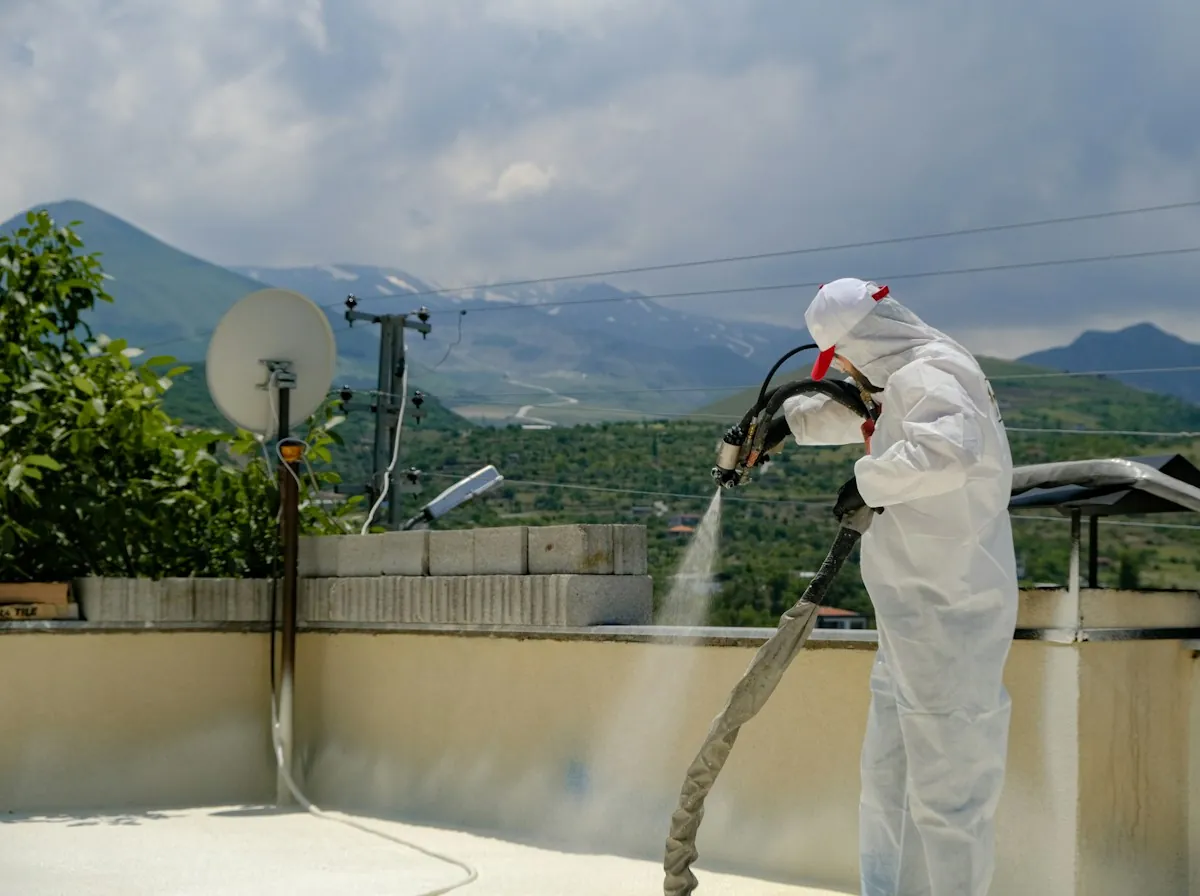
Here the flat roof is the whole roof, bounded by parapets and draining through an internal outlet or a scupper. At $5 to $14 per square foot by system, what decides whether it lasts is not the membrane but whether the water can leave -- and a blocked outlet ponds the roof rather than overflowing off an edge.
Flat roofing installs at $5 to $14 per square foot in New Jersey: EPDM $5 to $9, TPO $6 to $12, tear-off and insulation included. Across these towns it turns up in two very different forms and they need different thinking.


Flat roofing installs at $5 to $14 per square foot by system, tear-off and insulation included. Across these towns it appears in two forms: the whole roof on attached stock, and a rear addition on suburban stock. They fail differently and need different thinking. Here the roof has no eaves and no gutter: it drains through a parapet outlet, so the work is edge work and the outlet is the whole drainage system. Access is the other factor -- no side yard, and a dumpster that needs a street arrangement.
Standing water 48 hours after rain means the fall is wrong or the outlet is blocked. In a freezing winter that water expands inside a lap, lifts it, then thaws and runs in through the gap it made. Re-covering over it buys a couple of seasons.
Parapets, copings and internal outlets on attached buildings. A junction with a pitched roof above on suburban additions. Insulation, which is a real part of the cost and should be stated separately.
On a small rear addition, EPDM at $5 to $9 is usually the right system rather than merely the cheap one. TPO earns its premium on large areas over occupied space, and we will say which applies rather than defaulting upward.
This is the edge-failure end of the range. Attached buildings have no eaves and no gutters in the usual sense: water leaves through a parapet outlet or a scupper, so repairs here are coping, upstand and outlet work. Diagnosing a Passaic roof with a suburban checklist finds nothing.
Passaic sits at one extreme of the housing range this site covers, and Totowa and Rutherford sit near the other -- within a few miles of each other.
On the dense attached stock the flat roof is the whole roof, bounded by parapets, draining through an internal outlet or a scupper. On the suburban stock it is a rear addition or a garage, short-run and often with marginal fall because nobody designed much into it. The first fails at the parapet and the outlet; the second fails at standing water and at the junction with the pitched roof above.
Two are about New Jersey specifically, and one catches more than you would expect across eight town lines.
'Repair roof' is not a scope. 'Re-bed the valley, replace two vent boots, re-lap the upstand to the parapet' is -- and it can be checked when the work is finished, which is the entire point.
Membrane and thickness on a flat roof. Gutter size and downspout size on gutters. Shingle grade on a pitch. Those are the lines that separate a cheap quote from a lesser roof, and they are the first things left out.
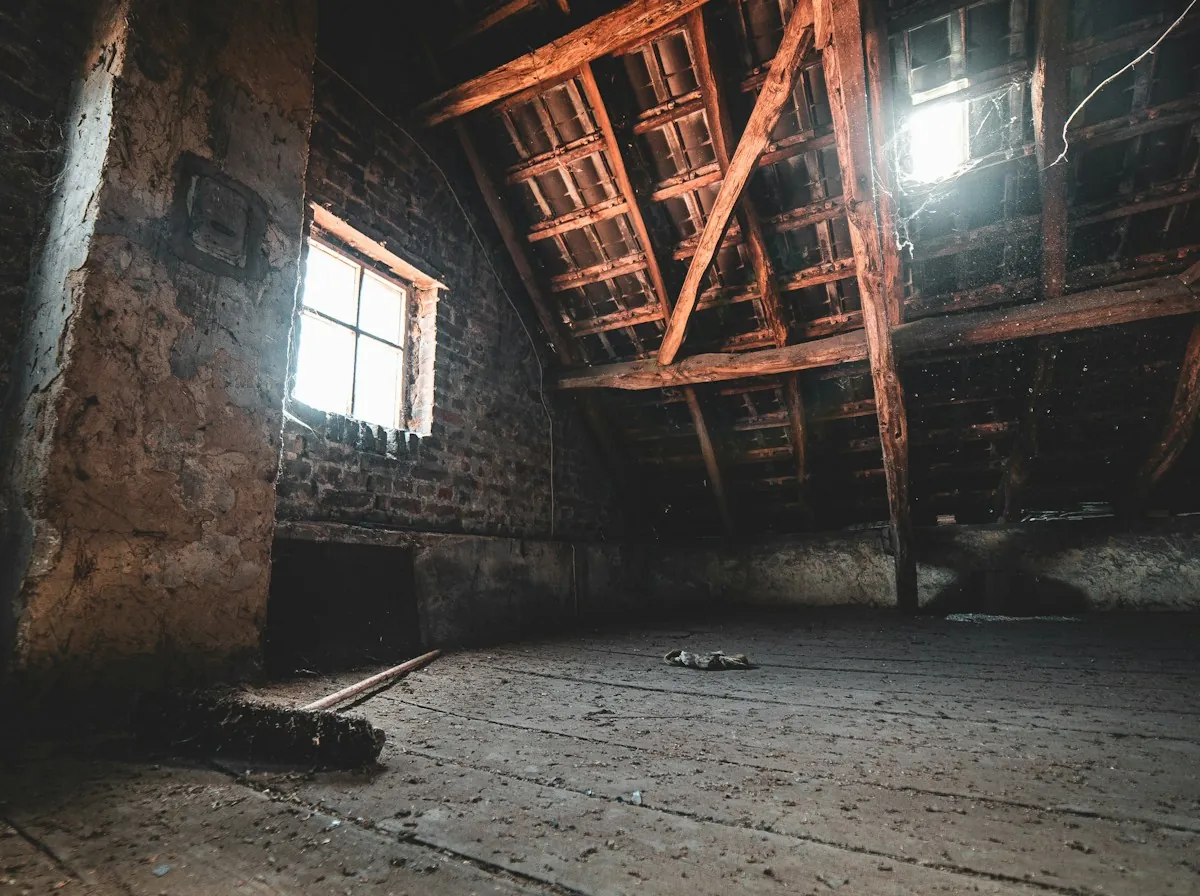
On most of this housing the truth about where water traveled is visible from underneath and nowhere else. A quote produced from the roof alone has skipped the half that tells you where to work.
A Passaic roof fails at its edges, not in its field.
Skylights on a flat roof behind a parapet are a different job from skylights on a pitch.
On a flat roof with a history of leaks and no obvious cause, infrared at $400 to $600 earns its money: wet insulation under a membrane is invisible from above and it is the commonest reason a repaired roof keeps failing.
On a parapet roof maintenance is almost entirely the outlet.
Large and varied. Real eaves, real gutters, real driveways.
Narrow plots, and two roof systems on one building.
The middle of the range, and genuinely unpredictable.
Built as a set, so the street is a reliable guide.
Mature trees. Gutter capacity beats gutter material.
Driveways and side access, but hillside staging.
Victorian detail. Never price this on area alone.
What people ask about this work, answered plainly.
More urgent than in a warm climate. Water still sitting 48 hours after rain means the fall is wrong or the outlet is blocked, and in a freezing winter that water expands inside laps and under flashings and lifts them mechanically.
EPDM at $5 to $9 per square foot is the cheaper system and on a small rear addition it is frequently right. TPO at $6 to $12 earns its premium on larger areas and where reflectivity matters. We will say which applies rather than defaulting to the pricier one.
Because they are describing their own process, not the law. New Jersey has a statewide Uniform Construction Code enforced locally, so the code is identical in Passaic, Clifton, Garfield, Lodi, Elmwood Park, Hawthorne, Totowa and Rutherford. What each town has of its own is a construction office, a fee schedule and an inspection diary.
Most New Jersey repairs run $350 to $1,800, with minor work from $150 to $600. A full replacement is $9,500 to $26,000 and most 2,000 square foot houses land at $12,000 to $18,000. Gutters are $8 to $16 per linear foot and a skylight replacement $500 to $1,500.
It depends on the building. Replacing a roof covering on a DETACHED one- or two-family dwelling is ordinary maintenance under N.J.A.C. 5:23-2.7 -- no permit, no inspection. An attached house, three or more units, or anything structural is permitted work. We confirm which office and what it needs before the work is booked.
The correct construction office confirmed before anything is booked. New Jersey figures, stated per lane rather than as one number.