Roof Repair in Garfield from $150. $350 to $1,800 for most New Jersey repairs, with the cause named rather than the symptom patched. Free inspection and a written quote.
Two things about Garfield repairs. Plots are narrow enough that staging and waste have to work within a few feet, and a two-family with a rear addition is usually two roof systems on one building -- so the honest question is which of the two is leaking before anybody prices either.
Repairs in New Jersey run $350 to $1,800 for most jobs and from $150 to $600 for minor work. Those are state figures. What moves a repair within that range is rarely the size of the damage -- it is whether the roof is the kind that fails at an edge or the kind that fails in the field, and across these eight towns both exist within a few miles.


Repairs in New Jersey run $350 to $1,800 for most jobs and from $150 to $600 for minor work. What moves a repair within that range across these eight towns is the kind of roof: one that fails at its edges, or one that fails in its field. Both exist within a few miles of each other here. Narrow plots move a Garfield quote more than the roof does. There is often nowhere to stage on the ground, and a two-family with a flat rear section is two systems that should be priced separately rather than averaged into one figure.
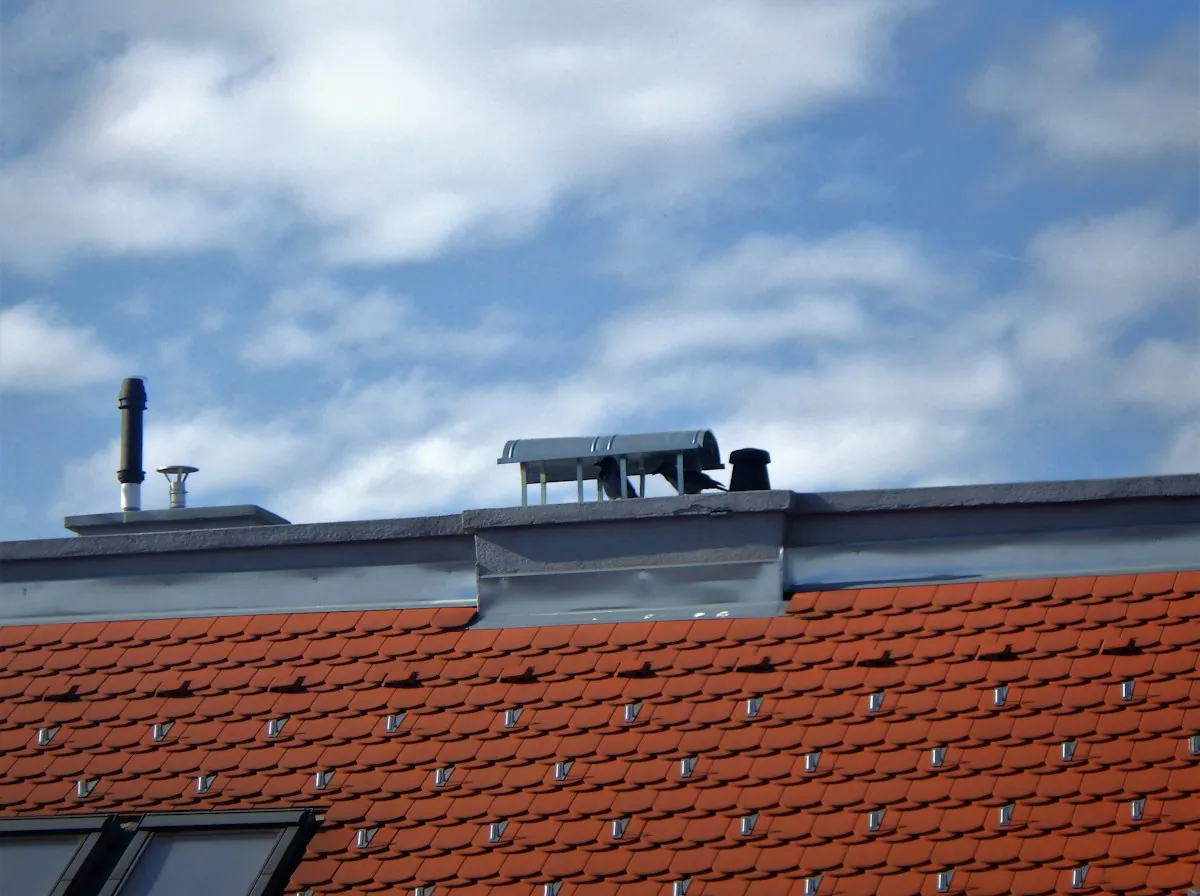
An attached building drains through a parapet outlet, so the repair is coping, upstand and outlet work. A suburban house with eaves and gutters fails at the eaves, the valleys and the penetrations. Diagnosing one with the other's checklist finds nothing.
A driveway and side access, a single identifiable cause, and calling at the first stain. In Totowa and Elmwood Park that is the normal case and it sits at the bottom of the range.
A narrow plot with nowhere to stage. Steep Victorian pitches needing staging rather than a ladder. Work over an occupied tenancy. And sealant from a previous attempt that has to come off first.
Garfield is the town where narrow plots do the most damage to a price. Houses sit close enough that scaffold, staging and waste all have to work within a few feet, and on a two-family with a rear addition there are usually two roof systems on one building. A quote pricing them as one has not been up there.
This is the most common confusion in this corner of New Jersey, and it sends people to the wrong conclusion about price.
New Jersey's Uniform Construction Code is statewide and enforced locally. It is identical in Passaic, Clifton, Garfield, Lodi, Elmwood Park, Hawthorne, Totowa and Rutherford. If three contractors from three towns describe three different sets of rules, the rules did not change -- somebody is describing their own habits, or is wrong.
An attached Garfield two-family, a post-war Clifton ranch with a driveway, and a Victorian Rutherford house with four valleys and a turret are three different jobs. The same roof honestly costs different money across a boundary, because of the building and the access rather than the geography.
A repair at $350 to $1,800 against a replacement at $9,500 to $26,000 is a real decision, and so is a flashing kit instead of a new skylight, or a physical inspection instead of infrared. We name the cheaper option when it is the correct one.
Narrow plots are what move a Garfield replacement.
A Garfield two-family typically has a pitched front and a flat rear, and the junction between them is where the water gets in.
On a narrow two-family, a skylight is frequently the only light a stairwell or an internal bathroom gets, which raises the stakes on getting the replacement right first time.
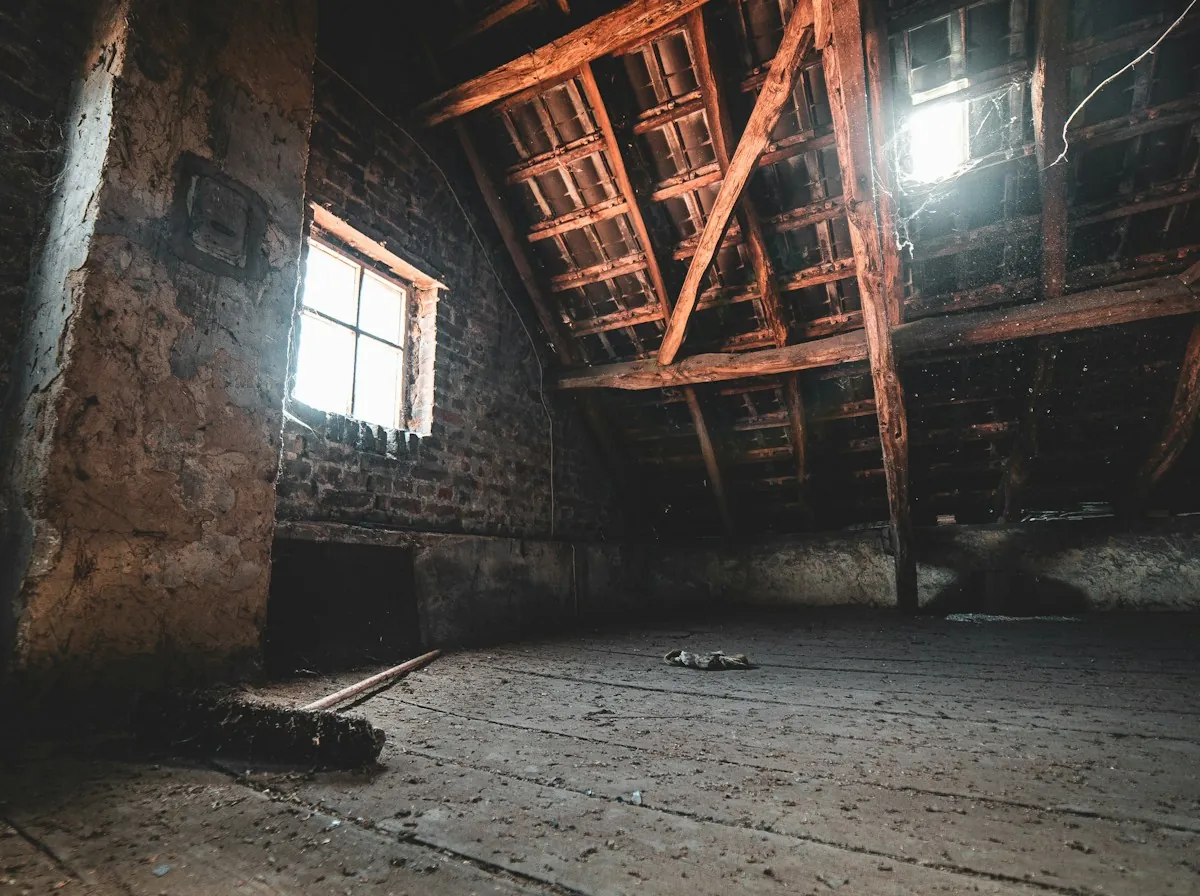
On a narrow two-family the roof space is often the only place the truth is visible, because the roof itself is hard to see from any vantage point and hard to stand on safely.
On a two-family the maintenance that matters most is the junction between the pitched front and the flat rear, because that is where this housing leaks.
Parapets and outlets. No eaves, no gutters, edge failures.
Large and varied. Real eaves, real gutters, real driveways.
The middle of the range, and genuinely unpredictable.
Built as a set, so the street is a reliable guide.
Mature trees. Gutter capacity beats gutter material.
Driveways and side access, but hillside staging.
Victorian detail. Never price this on area alone.
What people ask about this work, answered plainly.
Usually close, rarely exactly. Recent asphalt is widely available; older profiles and discontinued colors are not, and new never matches a covering that has had ten winters on it. Where a perfect match is impossible we take material from a low-visibility slope and put the near match there.
As long as the covering around it, if it was aimed at the right cause. That is why the survey establishes whether this is an edge-failure roof or a field-failure roof first -- a good repair in the wrong place fails whatever it cost.
Because of the building and the access, never the rules. A narrow Garfield plot with nowhere to stage, a Totowa house with a driveway, and a Victorian Rutherford roof with four valleys and a turret are three different jobs. Detail work and access are labor, and they do not scale with roof area.
It depends on the building. Replacing a roof covering on a DETACHED one- or two-family dwelling is ordinary maintenance under N.J.A.C. 5:23-2.7 -- no permit, no inspection. An attached house, three or more units, or anything structural is permitted work. We confirm which office and what it needs before the work is booked.
Usually yes, and it is the part of a gutter quote worth arguing about. A five-inch gutter on a large steep roof overflows in a downpour however well it is hung; six-inch with three-by-four downspouts costs a little more per foot and actually works. Material matters far less than size and fall.
The correct construction office confirmed before anything is booked. New Jersey figures, stated per lane rather than as one number.