Roof Repair in Rutherford from $150. $350 to $1,800 for most New Jersey repairs, with the cause named rather than the symptom patched. Free inspection and a written quote.
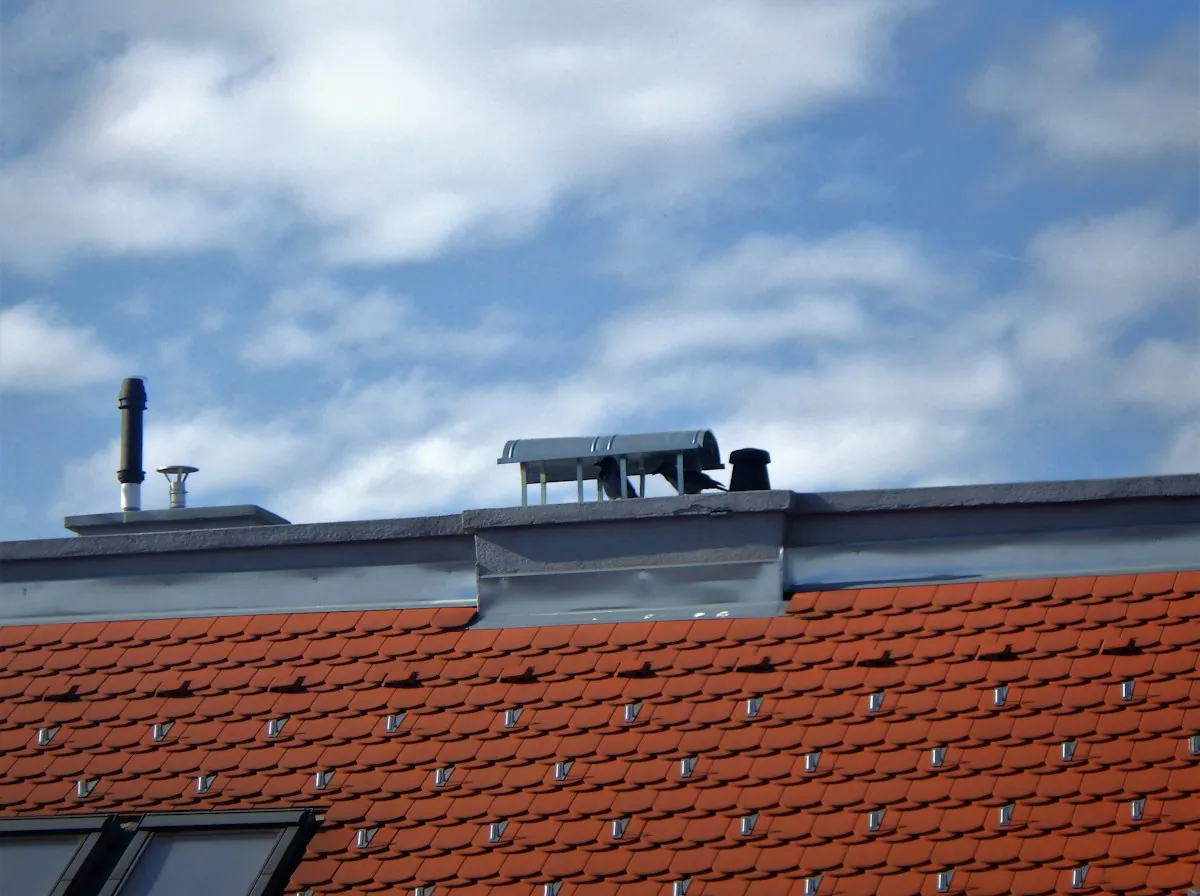
On a Victorian roof the repair is nearly always at a detail rather than in a field: a valley between two steep planes, a dormer cheek, the junction at a turret. Those are hand-worked and they are the reason a Rutherford repair costs more than its size suggests.
Repairs in New Jersey run $350 to $1,800 for most jobs and from $150 to $600 for minor work. Those are state figures. What moves a repair within that range is rarely the size of the damage -- it is whether the roof is the kind that fails at an edge or the kind that fails in the field, and across these eight towns both exist within a few miles.


Repairs in New Jersey run $350 to $1,800 for most jobs and from $150 to $600 for minor work. What moves a repair within that range across these eight towns is the kind of roof: one that fails at its edges, or one that fails in its field. Both exist within a few miles of each other here. Expect the top of the range and expect it to be explained. Turrets, dormers, multiple valleys and steep pitches are hand-worked detail, so two houses of the same footprint here can differ by a factor of two. Detail should be itemized separately from area.
An attached building drains through a parapet outlet, so the repair is coping, upstand and outlet work. A suburban house with eaves and gutters fails at the eaves, the valleys and the penetrations. Diagnosing one with the other's checklist finds nothing.
A driveway and side access, a single identifiable cause, and calling at the first stain. In Totowa and Elmwood Park that is the normal case and it sits at the bottom of the range.
A narrow plot with nowhere to stage. Steep Victorian pitches needing staging rather than a ladder. Work over an occupied tenancy. And sealant from a previous attempt that has to come off first.
The oldest and most complicated roofs covered here. Victorian houses bring steep pitches, turrets, dormers and multiple valleys, and every one of those is hand-worked detail rather than area. A price quoted on roof area alone will be wrong in Rutherford, usually badly.
Rutherford's Victorian stock is why this site prices detail work separately from area: two houses of the same footprint here can differ by a factor of two.
Worth knowing before you start ringing round, because the timing on this work is more predictable than most people assume.
Northern roofs fail at the edges and the outlets in the freeze, and the calls arrive in a cluster during the first thaw. Every roofer across these eight towns takes them in the same two weeks, so a roof that could have been surveyed comfortably in October becomes a queue in January -- and a maintenance visit that would have cost $150 to $600 becomes a repair.
Do not accept a Rutherford quote priced on area alone.
Flat roofing on a Victorian house is usually a later addition tacked onto something much older, and the junction with the original roof is both the leak and the difficult part.
On an older Rutherford roof a roof light may be original or may be a much later insertion into a steep slate or shingle pitch, and the two are not comparable jobs.
Steep Victorian pitches are exactly where nobody should be walking a roof to inspect it, which makes a drone survey at $200 to $400 the right tool here rather than an upsell.
A Victorian roof has more details to maintain than a modern one and every one of them is expensive to repair later: valleys between steep planes, dormer cheeks, turret junctions, built-in gutters behind fascias.
Parapets and outlets. No eaves, no gutters, edge failures.
Large and varied. Real eaves, real gutters, real driveways.
Narrow plots, and two roof systems on one building.
The middle of the range, and genuinely unpredictable.
Built as a set, so the street is a reliable guide.
Mature trees. Gutter capacity beats gutter material.
Driveways and side access, but hillside staging.
What people ask about this work, answered plainly.
Usually close, rarely exactly. Recent asphalt is widely available; older profiles and discontinued colors are not, and new never matches a covering that has had ten winters on it. Where a perfect match is impossible we take material from a low-visibility slope and put the near match there.
As long as the covering around it, if it was aimed at the right cause. That is why the survey establishes whether this is an edge-failure roof or a field-failure roof first -- a good repair in the wrong place fails whatever it cost.
No. The inspection is free, the written quote is free, and neither carries an obligation. A paid inspection is a different product -- a written report with photographs and an estimate of remaining life -- and we will say which one you actually need. What we will not do is give you a price at the curb.
Because they are describing their own process, not the law. New Jersey has a statewide Uniform Construction Code enforced locally, so the code is identical in Passaic, Clifton, Garfield, Lodi, Elmwood Park, Hawthorne, Totowa and Rutherford. What each town has of its own is a construction office, a fee schedule and an inspection diary.
Because of the building and the access, never the rules. A narrow Garfield plot with nowhere to stage, a Totowa house with a driveway, and a Victorian Rutherford roof with four valleys and a turret are three different jobs. Detail work and access are labor, and they do not scale with roof area.
The correct construction office confirmed before anything is booked. New Jersey figures, stated per lane rather than as one number.